

Workday, Progressive Insurance, Games Workshop
Published Last Week
Over the last few years, Progressive has blitzed past GEICO in the number of policies in force. And, more importantly, its combined ratio hasn't degraded. GEICO has taken a different approach and has seemed to have optimised to protect profit in exchange for gross written premium volume throughout the recent hard market cycle.
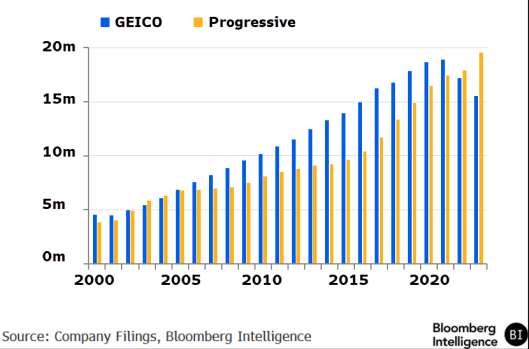
We interviewed multiple Progressive formers and a former senior executive at GEICO to explore the relative positioning and operational discipline of both companies. Part of Progressive's success is down to selectively winning preferred risks:
They are currently winning preferred risks because the rest of the industry has been shedding volume… they have been marketing while the rest of the industry went more dark. - Former Senior Vice President at GEICO
A former Progressive national accounts director also explains how its distribution mix has changed; PGR is now more weighted towards the direct channel, where preferred risks are mainly found:
Progressive started as an independent agent company… now it's almost 60-40; direct is outproducing the agency overall in premium… in about 10 years… probably 70-30. - Former Director of National Accounts, Progressive
Another reason for Progressive's growth in market share is its organisational structure. Product managers are called "the president of the state" and own both direct and agency pricing locally, with a 4-cent underwriting profit target. This pushes more ownership to the front line relative to GEICO:
We had daily profitability by line, could change down payments or marketing the next day… that loop lets us price each customer specifically and price out the ones we don't want. - Former VP at Progressive Insurance
Progressive was also the first to add monthly inflation factors to its policies. PGR takes the same cumulative rate as the industry but distributes it differently by risk and reprices it continuously without large state filings. This protected margins during recent inflation and allowed Progressive to continue to reinvest in marketing to gain share:
the monthly inflation factor is something where they were well ahead of everybody and they wrote this into their policy. So that if I called and I bought a Progressive policy, the price that I pay for that insurance is going to go up each month. It might be a two tenths of a point, it might be four tenths of a point. It might be filed and adjusted over time, but it's an automatic rate increase that they get. They knew ahead of anybody else, and were taking steps to price for, increased loss costs that are always going up. - Former Senior Vice President at GEICO
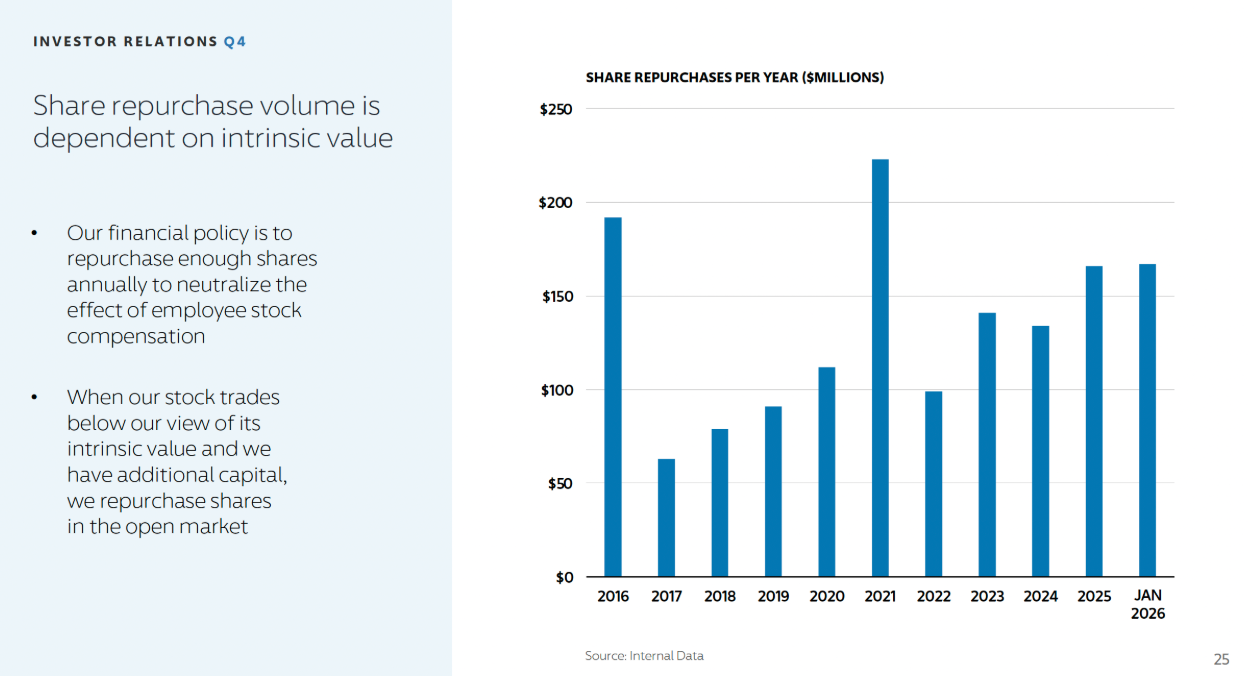
Management continues to buyback shares too:
This interview can be read alongside the following:
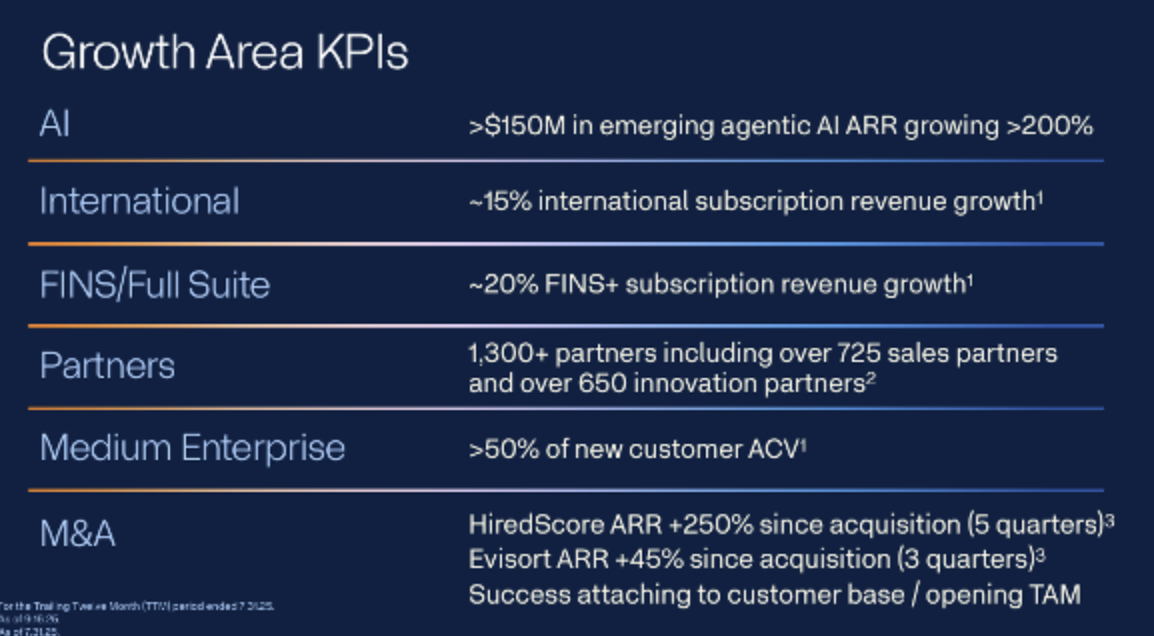
Cross-selling from HCM to Financials is one of Workday's biggest levers to drive stickiness. More regulated financial workflows are often seen to have greater data gravity than HR processes. Upselling FINS is an important factor in the WDAY bull case yet the company seems to be lagging competition. In EMEA, only 10-15% of Workday's HCM customers also run Financials. The company seems to lack the expertise to sell financials:
“Financial deals are typically larger in ACV but more complex and slower to close. Financial management penetration within existing HCM is an important growth area, but it is not moving as fast as we want it to. One of the reasons behind that is that we don't have enough expertise in-house to be able to talk to CFOs. That is one of the issues they have been trying to fix over the last 18 months. Typically, all we have ever sold is HCM, so when you put an AE in front of a CFO to talk about financial management, they cannot do it and it is quite embarrassing. They cannot discuss balance sheets or financial statements with the CFO - Former Director, Workday
An ERP solution for finance workflows is a complex product with thousands of edge cases. SAP and Oracle have been refining their offering over decades:
maybe 20% buy financials. Then they try to push to sell financials in the customer base. An example is oil and gas, where they couldn't really sell financials into because there were product gaps. When you have a company like SAP or Oracle who have been around 80 years, they can do joint venture accounting in aerospace, and they can do every edge case for oil and gas financials, which is very complicated. There are certain industries they can sell very well into for financials, but in other industries their product isn't really ready - Former Director, Workday
However, it's interesting that even without financials, Workday's HCM offering is strong enough to win vs SAPs bundle. This example of a large oil and gas customer explains the stickiness, customer inertia, and process of switching from SAP to WDAY:
We quantified the hours that would be saved in HR. We did that over the course of five or six different processes - their hiring flow, compensation, time tracking. HR said they had 500 people and were committed based on what they were seeing. If they spent the $5 million on Workday, they were going to let go of 50 people. The CTO's whole career was predicated on SAP. He had people on his team whose only job was to be an SAP expert. He didn't want to do it at all and was totally terrified. We had to take that up to the board of directors and the CEO to show we could let go of 50 people, save millions of dollars, and let go of SAP experts. Ultimately, he was overruled and ended up coming around to it. That whole process took a year, but we closed. Then SAP came back and said they would give it to them for free to keep them as a customer. Because we couldn't do financials - it was an oil and gas company - they were going to do HR with Workday because it is that much better, and keep SAP for finance. SAP tried to make a case, why would you do that? Now you are going to have these two systems not talking together and we will give you HR for free. They flew out their executives to try, but they did buy Workday in the end and ran the two systems separately because the value of Workday was that much better than SAP - Former Director, Workday
This interview can be read alongside the following:
Games Workshop owns the Warhammer tabletop miniature gaming hobby and related sci-fi and fantasy IP. Since 2016, revenue has 5x’d whilst EBIT margins have expanded from mid-teens to over 40% today. This performance is partly driven by an intense hobbyist loyalty and attachment to Warhammer IP.
As part of our ongoing Games Workshop coverage, we interviewed two B2B customers of the company. One operates the largest hobby center and store in the Nordics, the other a London-based gaming cafe with 2 locations. Both interact with hobbyists on a daily basis, selling Games Workshop products and providing a gaming and painting space for the community.
One question at the core of Warhammer, especially to outsiders, is what drives the loyalty to the brand? It’s a pretty unusual world to outsiders. Part of the loyalty is driven by its emotional investment and customisable narrative:
what is the attraction of the hobby? Why do people like this? The reason people like it is because of that front-loaded time investment of making a model and painting it. You're rewarded because, let's say I make a captain; I've made him and painted him, and then I put him on the table and play the game. The captain then does some stuff, he'll attack some aliens and I kill some aliens. You accumulate a narrative around this model. As you go, your army, your forces, and your units have done things. It's kind of like a role-playing game. They have conquered this enemy, they have fought in combat against these guys, or whatever it is. That really is the attraction. That is how people will talk about it. When you meet a hobbyist or you meet a fellow Warhammer player, you will recount a game you've just played, or you will say, "I love playing this character because he's done this a few times for me." That gives you investment. That's an emotional investment, which is kind of like gold dust, it's an emotional investment in the product. That's really what happens. - Co-founder at a London-based B2B Games Workshop Customer
This customisable narrative creates an emotional attachment to the models and is a personalised “Ikea Effect” for hobbyists, making them spend more time playing the game, which translates to greater spend:
“If you're just the painting guy, you would paint the things that look nice. But if you actually play, you will need to buy the models that you want to play with and you will want to change your strategy and try new things. So you will buy multiple of the same units because you want to experiment. But if you're just a painter, you will probably be satisfied with having just one unit. Why have two units if you just want to paint? Then you would buy something else to paint instead. Definitely an active gamer will also consume gaming material - you need your measuring tape and your dice and your objective markers.- CEO and Co-founder at one of the largest B2B Games Workshop customers in the Nordics.
The B2B customer explains how Games Workshop monetises this love for its brand:
Their framework is the game and its rules are a catalyst for model purchases. As an easy example of how this works: every three years they have an edition cycle. Every three years it's the new version of Warhammer 40,000 or Warhammer Age of Sigmar. This brings with it rules changes which will then trickle down to changing the power levels of different armies, which will then create a response from the community saying, "I'm going to buy five of this model" or "I'm going to buy two dragons, because those are good now.There's a churn of rules which are the catalyst for players to buy models. - Co-founder at a London-based B2B Games Workshop Customer
Hobbyists are spending significant sums per month:
If you're into the game and this is something that's important for you, you want to buy new miniatures, new armies, and paint everything. I would say that the person into the hobby spends between 200 and 400 euros every month. - CEO and Co-founder at one of the largest B2B Games Workshop customers in the Nordics.
“The people that come once a week or more will usually buy something almost every week. We have a small core, 20 to 50 people, who on pre-orders, we will see their name turn up again and again. In that case, they're spending £3,000 to £5,000 a year on the models. To accompany that, you have the paints. A paint pot is about £3, a paintbrush depends where you get it from. But you could put another £100 to £200 on the accompanying accessories for that. But the models are always the big expenditure outlay for these people who play the game. - Co-founder at a London-based B2B Games Workshop Customer
Most of the hobbyists are professional millennials with money to burn. How this game translates to younger audiences is a long-term question we're exploring:
There is going to be a limit as to how much more money you can get out of this returning millennial professional cohort. The thing is, kids don't have as much spending power…right now they're kind of inaccessible to kids. We have kids who come and play, but these are 500-page hardback rulebooks and £1,000 expenditure. What 8-year-old is doing that? - Co-founder at a London-based B2B Games Workshop Customer
This interview can be read alongside the following:
Related Content

© 2026 In Practise. All rights reserved. This material is for informational purposes only and should not be considered as investment advice.