

Credit Acceptance: Collection rates below forecast and Economic Profit
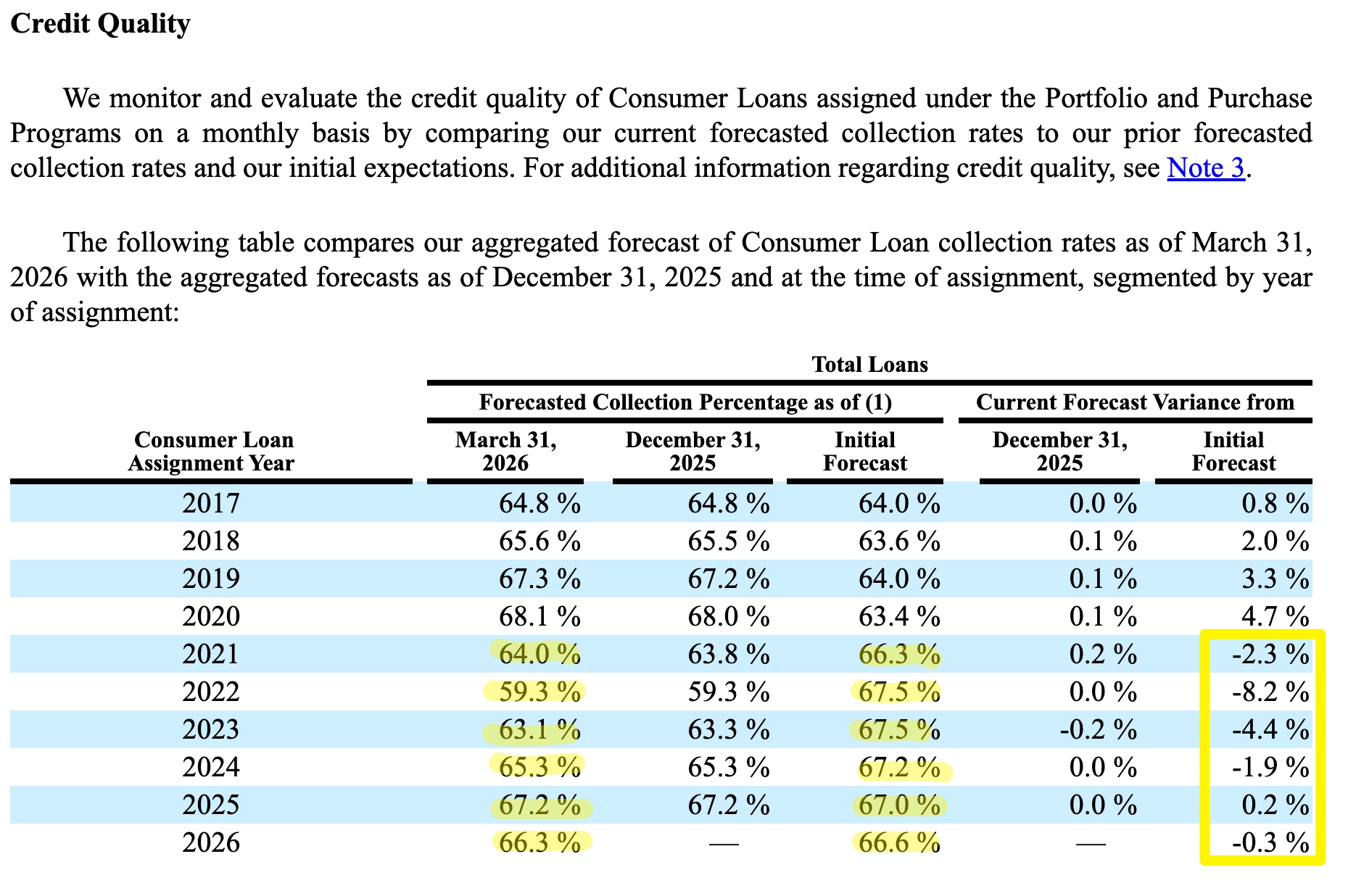
Credit Acceptance's economic profit (EP), their profitability measure, has fallen 70% in four years even as revenue grew, because that revenue was booked on collection rate forecasts recent vintages haven’t met. New loans are still written at ~67% against the ~64% those vintages have realized recently, while origination volume has stalled. Based on our estimates, a decline to the 64% recent vintages have averaged from the 67% booked, would cut EP roughly 40% to ~$100M.
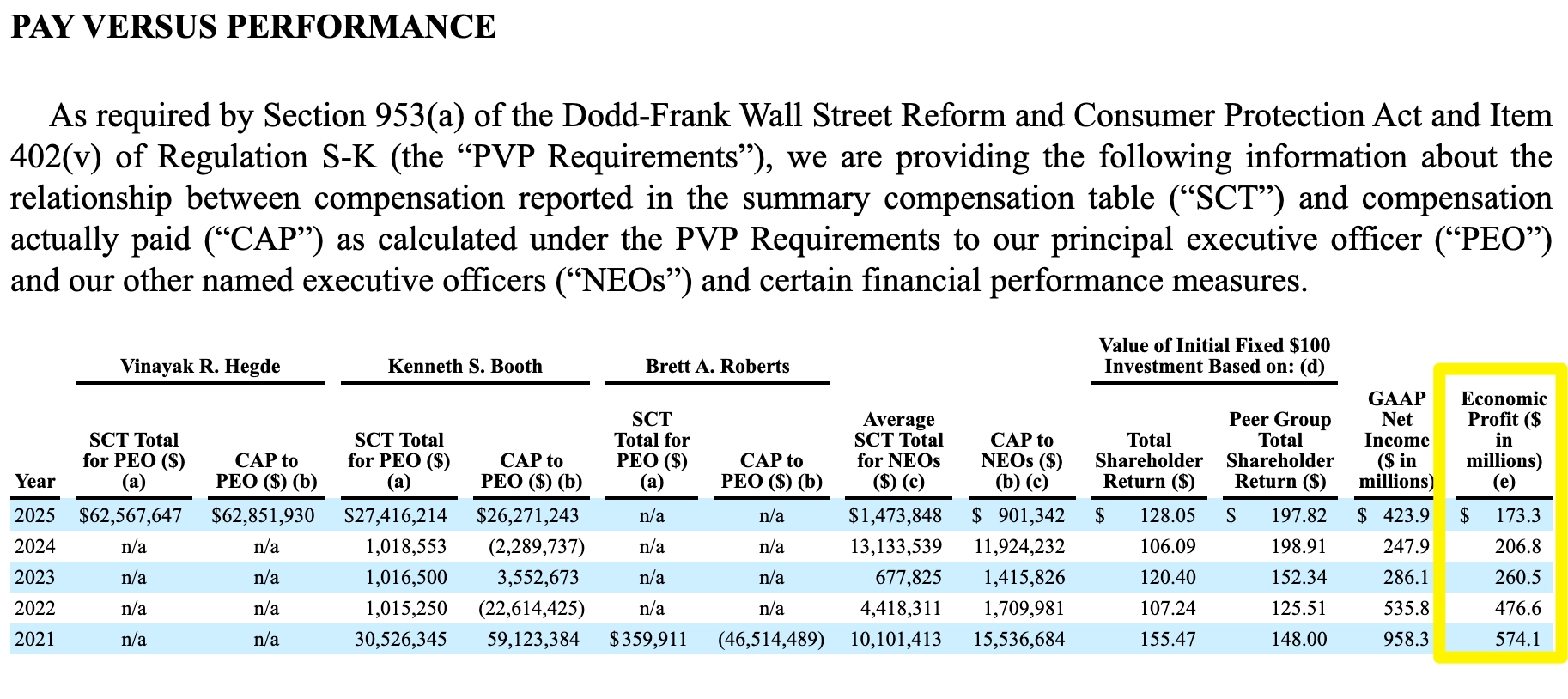
CACC’s Economic Profit has declined by -70% driven by lower than expected collection rates
Economic profit — the return Credit Acceptance earns on its capital above its cost of capital — is the profitability measure CACC sets profit-sharing by and reports as its pay-for-performance metric. It has fallen from $574M (2021) to $173M (2025), -70% across four consecutive years — while finance charges revenue rose from $1.74B to $2.14B over the same period. On management's own yardstick, profit is moving opposite to revenue.
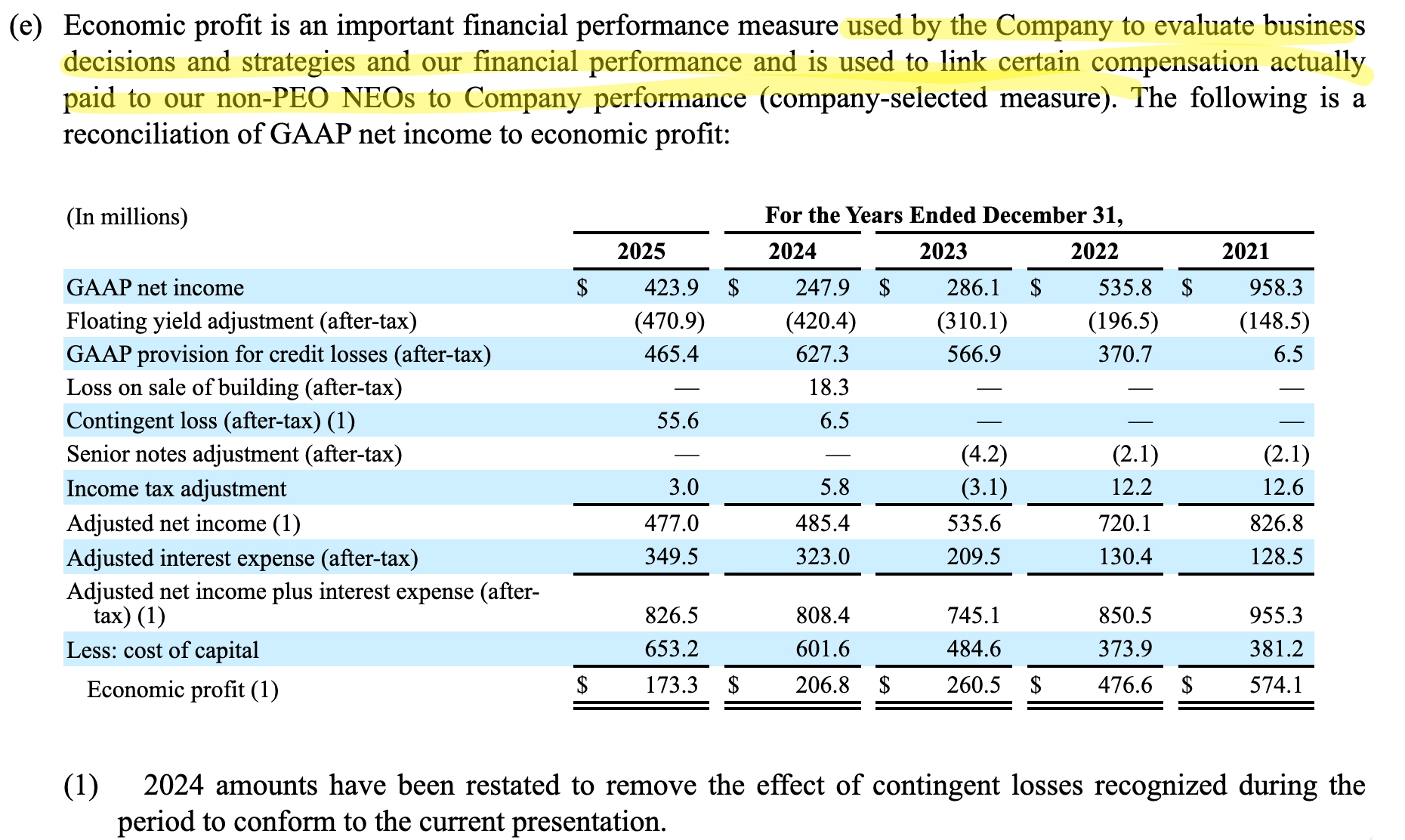
To understand the drop in EP we first need to understand the trend in collection rates in recent years. Credit Acceptance recognizes revenue on the share of each loan's contractual payments it expects to collect. That initial forecast stepped up to a ~67% baseline with the 2021–2022 vintages — ~300 bps above the 2016–2020 average — and has since been forecasted lower on every 2021–2024 vintage. The revenue those vintages produced was based on assumptions at origination, while the catch-up to actual performance amounted to $1.246B during 2023–2025, recorded through the provision for credit losses on forecast changes.
The yield Credit Acceptance reports under GAAP — based on contractual cash flows — rose to a record 26.9% in 2025, which management attributes to "higher contractual yields on more recent Consumer Loan assignments".
Free Sample of 50+ Interviews
Sign up to test our content quality with a free sample of 50+ interviews.
Related Content

© 2026 In Practise. All rights reserved. This material is for informational purposes only and should not be considered as investment advice.